


Table of Contents
- Introduction: Understanding Dental Education Timelines
- Why Knowing “How Long Is Dental School” Matters
- Overview of Dental School Duration in the U.S.
- Program Breakdown: From Undergraduate to DDS/DMD
- 4.1 Pre‑Dental Undergraduate Studies
- 4.2 Dental School: Years 1–2 (Foundational Sciences)
- 4.3 Dental School: Years 3–4 (Clinical Training)
- 4.4 Optional: Specialty Residencies (Length Varies)
- 4.1 Pre‑Dental Undergraduate Studies
- Accelerated & International Dental Programs
- Licensing Steps After Graduation
- Financing Dental Education
- Career Pathways: Where Dental Temps Fit In
- 8.1 Role of a Dental Temp Agency
- 8.2 Support from US Dental Temp Agencies
- 8.1 Role of a Dental Temp Agency
- Comparing “How Many Years Is Dental School” With Other Degrees
- Tips for Aspiring Dentists to Handle the Journey
- FAQs About Dental School Duration
- Conclusion: The Path Ahead
Introduction: Understanding Dental Education Timelines
Becoming a dentist is a rewarding career path, but it requires a significant commitment to education and training. One of the most common questions aspiring dentists ask is, how long is dental school?
Becoming a dentist involves a multi-stage educational journey that typically takes about eight years after high school in the United States. This includes four years of undergraduate study followed by four years of dental school. For those interested in specialized fields, the dental school duration can extend even further with postgraduate residency programs. This significant investment in time is balanced by high earning potential, the opportunity to be your own boss, and the satisfaction of improving patients’ oral health and overall well-being.
Understanding the dental school duration and what each stage entails is crucial for planning your career. This guide will break down the typical timeline and what to expect during each program, from undergraduate prerequisites to specialized residencies
Why Knowing “How Long Is Dental School” Matters
Understanding dental school duration helps you:
- Plan your life financially and personally
- Know when you’ll be able to start working
- Understand career timelines (e.g., entering private practice or specialties)
- Compare with other health professions like medicine or pharmacy
The question “how many years is dental school?” has real-life implications for scheduling, budgeting, and perseverance.
Overview of Dental School Duration in the U.S.
The first step in answering how long is dental school is completing a bachelor’s degree. This typically takes four years. While you don’t necessarily need a specific major, most dental schools require a strong foundation in science courses. Common prerequisite courses include biology, chemistry (general and organic), and physics.
Many aspiring dentists choose majors like biology or chemistry to fulfill these requirements. A pre-dentistry program, though not mandatory, can help ensure you complete all necessary courses
Typically, your pathway is:
- Undergraduate education – 4 years
- Dental school – 4 years
- Optional specialty training – 2–6 years
- Licensing exams and residency – additional months
So, dental school duration (including undergraduate) ranges from 8 to 14 years, depending on your goals.
Program Breakdown: From Undergraduate to DDS/DMD
Pre‑Dental Undergraduate Studies (4 Years)
Nearly all dental schools require:
- A bachelor’s degree
- Science prerequisites: biology, chemistry, physics, anatomy
- Dental Admission Test (DAT) score
- Extracurriculars and shadowing
- GPA of 3.4+ typically
This long lead-up sets the foundation and ensures you’re ready for the challenge.
Dental School: Years 1–2 (Foundational Sciences)
These years cover:
- Anatomy & physiology
- Biochemistry & pharmacology
- Oral pathology
- Pre-clinical labs (working with models)
Successful completion of the National Board Dental Exam, Part I, is usually required after year 2.
Dental School: Years 3–4 (Clinical Training)
Your education becomes hands-on:
- Clinical patient care under supervision
- Restorative dentistry, periodontics, prosthodontics, oral surgery
- Emergency dentistry
- Financial/practice management basics
After year 4, you’ll take the National Board Dental Exam, Part II, along with required clinical board exams. This officially answers “how long is dental school?”, four academic years.
Optional: Specialty Residencies (Length Varies)
Some dentists choose to specialize. Common specialties and their lengths:
- Orthodontics: 2–3 years
- Periodontics: 3 years
- Oral surgery: 4–6 years
- Pediatric dentistry: 2 years
Now your total training could be 10+ years post-high school.
Accelerated & International Dental Programs
Some universities offer 3-year accelerated DDS programs, but they are rare and highly competitive. Always confirm duration with accreditation bodies, typically, full accreditation requires 4 years of training.
International dental graduates may pursue advanced standing programs, often 2–3 years, to earn a U.S. DDS or DMD. Be careful to research licensing eligibility and state requirements.
Licensing Steps After Graduation
Earning your dental degree isn’t enough to practice. You must:
- Pass national board exams (Part I & II)
- Complete clinical/lab exams (state or regional)
- Apply for state licensure
- Optional: residency for advanced training
Until you get your license, your ability to practice is limited,a key factor to know when asking “how long is dental school?”
Financing Dental Education
High school? Expect to start saving. During undergrad and dental school:
- Dental school costs $300k+ over 4 years
- Scholarships may help but are limited
- Federal and private loans are often necessary
- Residency stipends or income from part-time work can ease debt
Financial planning is critical,be aware of your total cost across all years.
Career Pathways: Where Dental Temps Fit In
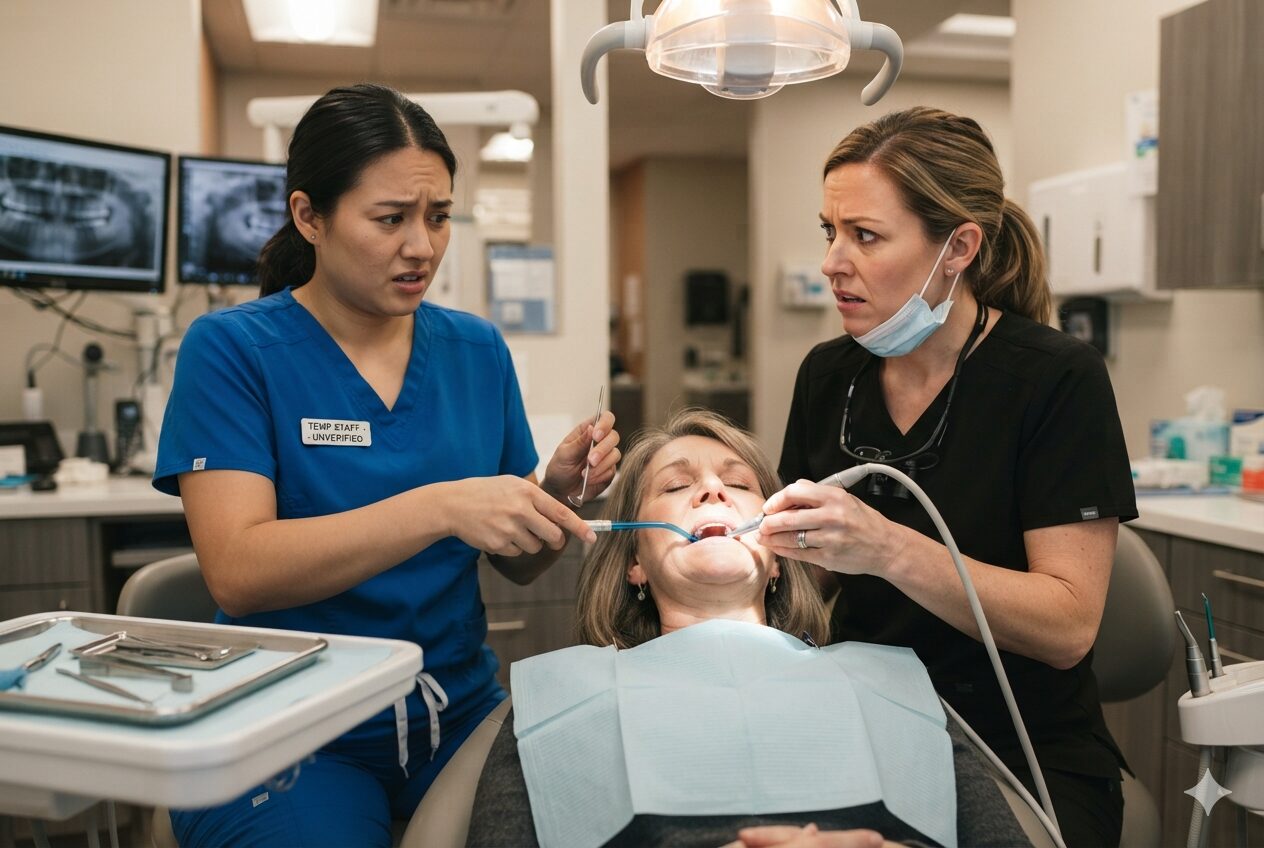
Those beginning their careers often use dental temp staffing for flexibility.
Role of a Dental Temp Agency
Before licensure or after, a dental temp agency can connect you with short-term placements:
- Gain experience in varied settings
- Fill coverage gaps and earn income
- Build clinical confidence before full licensure
Support from US Dental Temp Agencies
Agencies operating across states help students and new grads navigate licensing and employment:
- Provide temporary roles in dental offices
- Offer mentorship and onboarding
- Help with paperwork and credential verification
Connecting with these agencies offers early career advantages.
Comparing “How Many Years Is Dental School” With Other Degrees
Degree | Typical Duration |
Nursing (BSN) | 4 years |
Physician (MD/DO) | 8 years + 3–7 year residency |
Dental (DDS/DMD) | 4 years + optional residency |
Pharmacist (PharmD) | 6 years total |
Dentistry fits into the middle,longer than nursing, but shorter than full medical training.
Tips for Aspiring Dentists to Handle the Journey
- Stay organized: Keep track of prerequisites, applications, and finances
- Balance life and study: Stress management is key
- Network early: With professors, students, and temp agencies
- Gain experience: Shadow, volunteer, or work part-time in dental offices
- Consider residencies if you want to specialize
Conclusion: The Path Ahead
If you’ve asked “how long is dental school?” or “how many years is dental school?”, now you know. A general dentist path is approximately 8 years (4 undergrad + 4 dental school), with optional specialty residencies extending it further. Understanding dental school duration helps you plan, finance, and prepare for this life-changing career.
Enlisting support from dental temp agency or US dental temp agencies can help fill the gap between school and full practice,with experience, networking, and income. The effort is substantial, but the reward is a respected profession, lifelong learning, and meaningful patient care.
FAQs About Dental School Duration
Q1: Can I finish dental school in 3 years?
Only a limited number of programs offer accelerated paths. Most still require 4 years.
Q2: When will I start earning income?
Most begin working after 4 years + licensure, though temp roles may provide income earlier.
Q3: Does specialty training extend the timeline?
Yes,specialties add 2–6 years of advanced training beyond general dental school.
Q4: Do US dental temp agencies place students?
Yes, especially in externships and pre-licensure training roles.