

Running one dental clinic requires strong leadership, organization, and teamwork. Running multiple dental clinics requires something even more important, systems.
As dental groups expand into two, five, or even twenty locations, hiring becomes more complex. One clinic may hire quickly but without structure. Another may delay decisions and lose good candidates. Over time, this creates inconsistency in service quality, staff morale, and financial performance.
That is why understanding How Multi-Location Dental Practices Can Standardize Hiring and Staffing Across Clinics is essential for sustainable growth.
When staffing systems are clear and standardized, every clinic benefits. Patients receive consistent care. Employees understand expectations. Leadership can grow without chaos.
In this article, we will explain in practical and simple steps How Multi-Location Dental Practices Can Standardize Hiring and Staffing Across Clinics while maintaining flexibility and quality.
Why Standardization Is Critical for Growing Dental Groups
Growth is exciting. It means your brand is trusted, your services are in demand, and your business model works. However, growth also increases complexity.
When each clinic makes independent hiring decisions without a shared framework, quality begins to vary. One office may prioritize speed. Another may prioritize personality. A third may not properly verify credentials.
Over time, this inconsistency weakens the organization.
Understanding How Multi-Location Dental Practices Can Standardize Hiring and Staffing Across Clinics allows leadership to create stability across all branches. Standardization ensures:
- Every clinic hires using the same quality standards
- Patients experience consistent care
- Team members understand expectations
- Leadership can make data-driven decisions
Standardization does not remove flexibility. Instead, it creates a foundation that supports healthy growth.
Common Hiring Challenges Across Multiple Clinics
Before solving a problem, we must clearly understand it. Multi-location dental practices often face similar staffing issues.
One common problem is inconsistent hiring criteria. If each office manager decides independently what makes a “good hire,” the results will vary. This leads to uneven team performance.
Another challenge is slow hiring timelines. Without a clear approval system, resumes sit in inboxes. Interviews are delayed. Strong candidates accept other offers.
High turnover is also common. When expectations are unclear or onboarding is weak, new employees leave within months. This increases hiring costs and damages morale.
Burnout is another major issue. If one clinic is understaffed while another is fully staffed, resentment builds. Overtime increases. Productivity drops.
These challenges highlight why it is important to focus on How Multi-Location Dental Practices Can Standardize Hiring and Staffing Across Clinics before scaling further.
Building a Centralized Hiring Structure
One of the most powerful steps in solving staffing inconsistency is centralization.
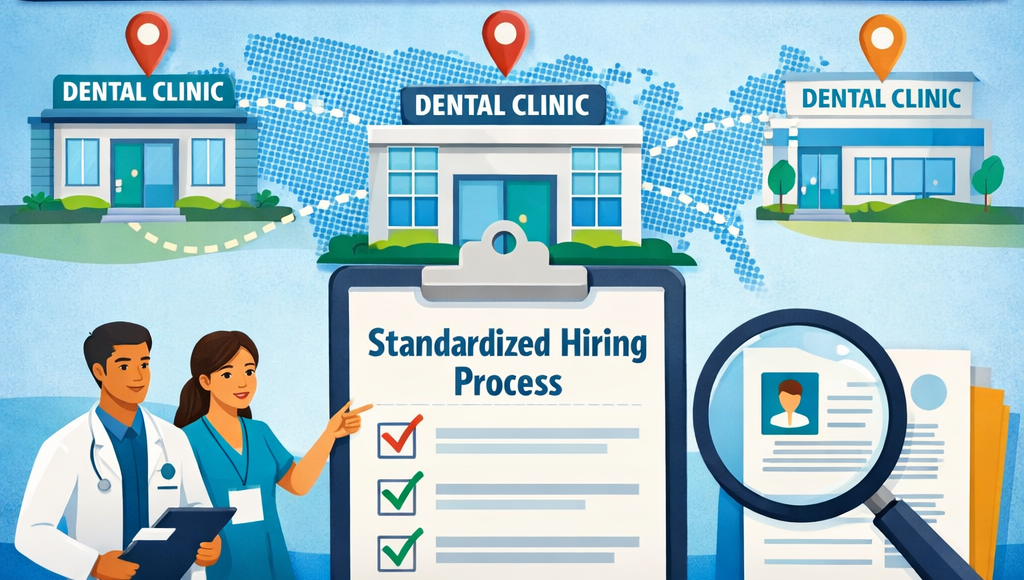
Instead of allowing each clinic to manage hiring independently, create a centralized hiring system. This may include a central HR team or staffing coordinator who handles early-stage recruitment tasks.
Centralized hiring can manage:
- Job postings across platforms
- Resume screening
- License and certification verification
- Background checks
- Initial interviews
This ensures every candidate meets the same standards before reaching a clinic manager.
When leadership invests in centralized processes, they strengthen their ability to apply How Multi-Location Dental Practices Can Standardize Hiring and Staffing Across Clinics effectively.
Creating Unified Job Descriptions
Clear job descriptions are the backbone of strong hiring systems.
When different clinics use different job descriptions for the same role, confusion follows. For example, one location may expect a dental assistant to handle expanded duties, while another does not communicate those expectations clearly.
Unified job descriptions should include:
- Required certifications and licenses
- Years of experience needed
- Technical skills (software, procedures, compliance)
- Soft skills (communication, teamwork)
- Performance expectations
Standardizing Interview and Screening Processes
Hiring decisions should not depend only on intuition. Structured interviews create fairness and predictability.
Develop a standardized interview guide with core questions used across all clinics. This allows leadership to compare candidates more accurately.
Examples of structured questions may include:
- Describe how you handle high patient volume days.
- How do you manage communication with difficult patients?
- What steps do you take to maintain compliance and safety?
Using scoring sheets also helps reduce bias. Candidates can be evaluated based on defined competencies rather than personal preference.
Leveraging Temporary Staffing for Stability
Even with strong systems, unexpected staffing gaps happen.
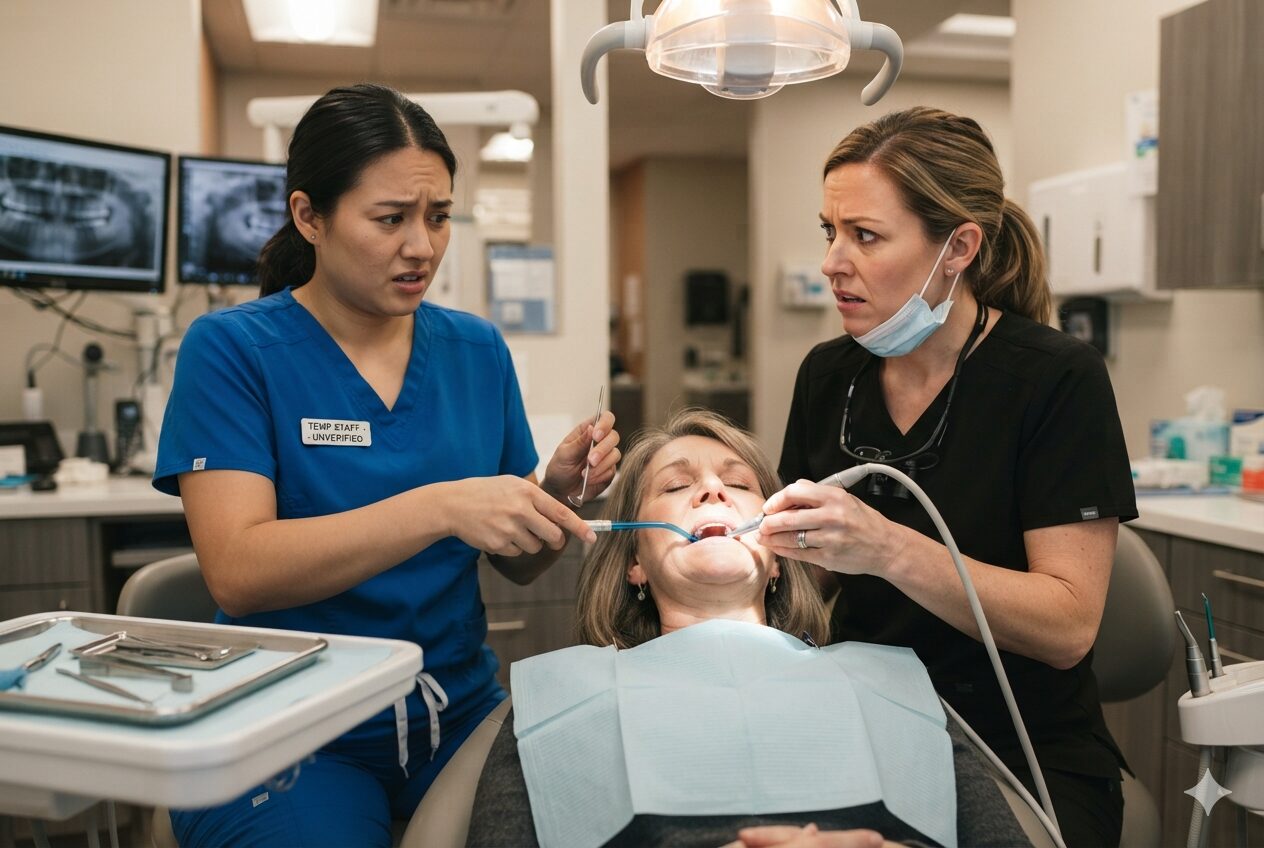
Employees get sick. Maternity leaves begin. Team members relocate. Growth increases demand faster than hiring can keep up.
This is where temporary staffing becomes essential.
Temporary staffing supports flexibility while long-term hiring processes continue.
In many cases, flexible staffing partnerships are a practical solution within How Multi-Location Dental Practices Can Standardize Hiring and Staffing Across Clinics, especially during rapid expansion.
Developing a Consistent Onboarding Experience
Hiring does not end when the contract is signed. Onboarding determines long-term success.
Each new employee should experience the same structured onboarding process, regardless of location.
A standardized onboarding checklist may include:
- Welcome orientation session
- Introduction to company values
- Clinical and safety protocol training
- Software system training
- Clear explanation of performance expectations
When onboarding is consistent, employees feel supported. They integrate faster and perform better.
Using Technology to Track Hiring Performance
Technology simplifies complexity.
An Applicant Tracking System (ATS) allows multi-location practices to monitor number of applicants per role, time to hire, interview feedback, hiring bottlenecks, etc.
Data provides visibility. Leadership can identify which clinics struggle with hiring delays and which roles are hardest to fill.
Tracking metrics supports long-term success in applying How Multi-Location Dental Practices Can Standardize Hiring and Staffing Across Clinics because decisions become evidence-based rather than emotional.
Aligning Culture Across Locations
Culture is often invisible but extremely powerful.
Each clinic may have its own personality. That is natural. However, core values should remain consistent across all locations.
When hiring aligns with these shared values, staff feel connected to the larger organization.
Examples of shared cultural principles:
- Patient-centered care
- Accountability
- Team collaboration
- Continuous improvement
Measuring Success and Improving Continuously
Standardization is not a one-time project. It is an ongoing process.
Leadership should regularly review staffing performance across all clinics. Compare turnover rates. Evaluate hiring timelines. Monitor patient satisfaction related to staffing consistency.
Continuous evaluation ensures the system evolves as the organization grows.
Scaling a dental group across multiple locations is an exciting achievement. But growth without systems creates stress, inconsistency, and burnout.
By centralizing hiring, unifying job descriptions, standardizing interviews, using flexible staffing solutions, aligning culture, and tracking performance metrics, dental groups can create stability across all locations.
Understanding How Multi-Location Dental Practices Can Standardize Hiring and Staffing Across Clinics is not simply about process efficiency. It is about protecting your reputation, strengthening your team, and ensuring patients receive consistent, high-quality care.
When hiring becomes standardized, growth becomes sustainable.