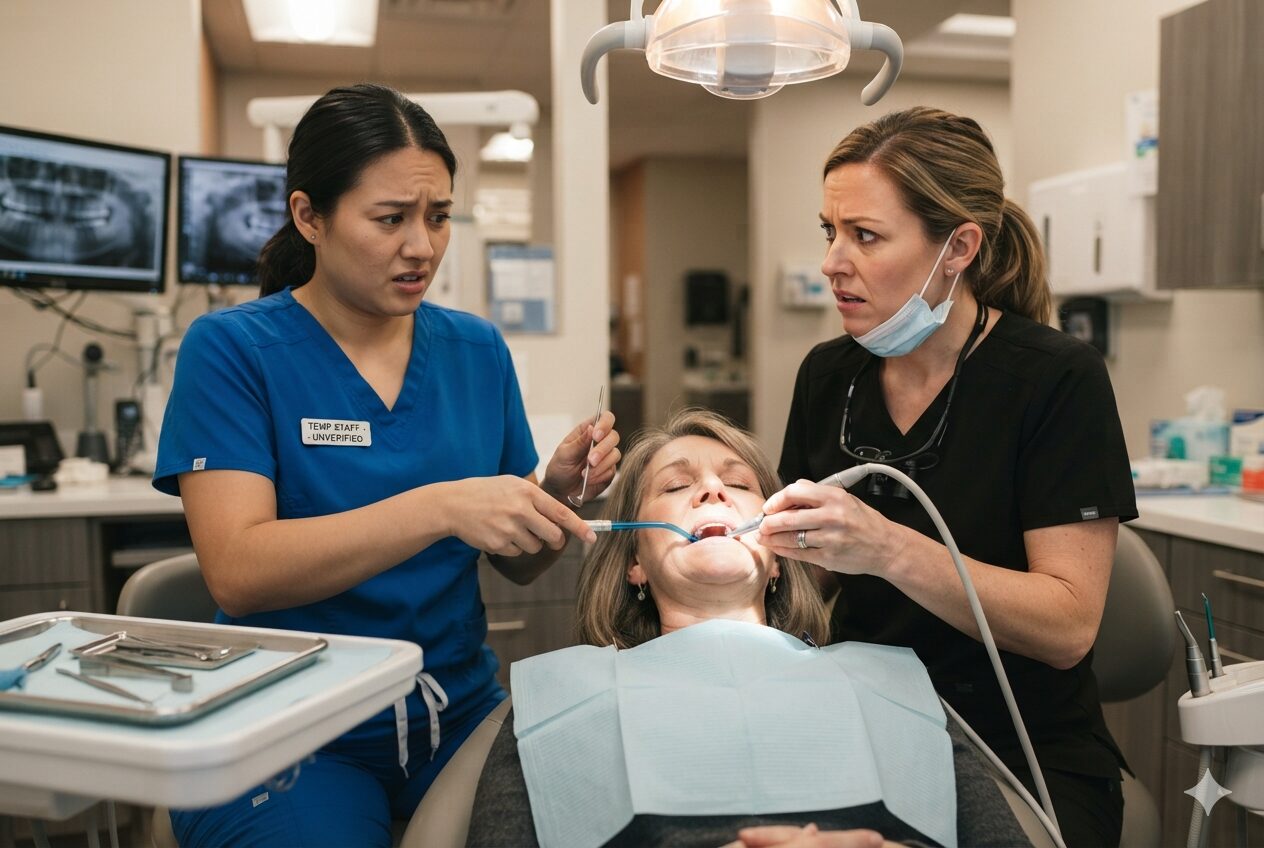


Every dental practice owner has experienced it.
A hygienist calls in sick on a fully booked day. A dental assistant resigns with two weeks’ notice. A front desk coordinator suddenly relocates. The schedule is full, patients are arriving, and there is no backup plan.
Last-minute staffing gaps create stress, lost revenue, and frustrated patients. They also increase pressure on the remaining team members, which can lead to burnout and even more resignations.
This is why Workforce Planning for Dental Practices: How to Avoid Last-Minute Staffing Gaps is not just a management idea, it is a business necessity.
When workforce planning is done correctly, practices do not panic when someone is absent. Instead, they rely on a structured system that anticipates risks and prepares solutions in advance.
In this article, we will explain in simple and practical steps how Workforce Planning for Dental Practices: How to Avoid Last-Minute Staffing Gaps can protect productivity, improve team morale, and strengthen long-term stability.
Why Staffing Gaps Are So Disruptive
Dental practices operate on tight schedules. Every appointment slot represents revenue, production, and patient trust.
When one team member is missing, the entire workflow is affected. If a hygienist is absent, hygiene production drops. If an assistant is unavailable, the dentist may see fewer patients. If the front desk is short-staffed, scheduling errors increase.
These disruptions are not only operational. They also affect morale. When remaining staff must work faster and longer to compensate, stress increases. Over time, this pressure can push more employees to leave.
Understanding this impact is the first step in recognizing why Workforce Planning for Dental Practices: How to Avoid Last-Minute Staffing Gaps must be part of leadership strategy.
Understanding Workforce Planning in Dentistry
Workforce planning means analyzing current staffing levels, predicting future needs, and preparing for potential disruptions before they happen.
It is proactive rather than reactive.
When leadership understands these variables, Workforce Planning for Dental Practices: How to Avoid Last-Minute Staffing Gaps becomes structured and predictable.
Instead of asking, “How do we fix today’s problem?” workforce planning asks, “How can we prevent tomorrow’s problem?”
In dentistry, this includes evaluating:
- Patient volume trends
- Seasonal fluctuations
- Planned vacations
- Historical sick leave patterns
- Growth plans and new services
The Real Causes of Last-Minute Staffing Gaps
Staffing gaps rarely happen without warning signs.
Common causes include:
Burnout from understaffing
Poor communication about schedules
Lack of backup personnel
Unexpected resignations
Seasonal illness spikes
Rapid practice growth
Often, gaps occur because there was no contingency plan.
For example, if a practice relies heavily on one hygienist without backup, even one absence creates disruption.
Forecasting Patient Demand Accurately
Patient demand directly determines staffing needs.
If patient volume increases by 15%, staffing must adjust accordingly. Otherwise, bottlenecks occur.
Review historical data:
- Monthly appointment numbers
- Seasonal busy periods
- Hygiene recall cycles
- Production per provider
For example, many practices experience higher patient demand before holidays or at the beginning of insurance benefit periods.
Accurate forecasting reduces surprises.
Creating a Staffing Buffer System
A staffing buffer acts as a safety net.
Instead of operating at minimum staffing capacity, practices maintain slight flexibility.
This does not always mean hiring additional full-time staff. It may involve:
Part-time professionals
On-call team members
Shared staff between nearby locations
Pre-approved temporary staffing partners
A buffer reduces panic when absences occur.
Building a Reliable Talent Pipeline
Many practices begin recruiting only when a position opens. This creates urgency and limits options.
Instead, maintain a talent pipeline.
Stay connected with:
Dental schools
Hygiene programs
Local professional networks
Industry events
Staffing agencies
Collect resumes regularly, even when not actively hiring.
When a vacancy appears, candidates are already available.
Proactive recruiting supports Workforce Planning for Dental Practices: How to Avoid Last-Minute Staffing Gaps by reducing hiring delays.
Leveraging Temporary and Per Diem Support
Temporary staffing is no longer just a short-term solution. It is part of modern workforce strategy.
Temporary professionals can:
Cover vacations
Support during illness
Fill gaps during hiring processes
Assist during seasonal demand increases
Working with reliable staffing partners ensures quick access to qualified professionals.
Cross-Training for Operational Flexibility
Cross-training strengthens resilience.
When front desk staff understand scheduling and billing, coverage becomes easier. When assistants are trained in multiple procedures, workflow disruptions decrease.
Cross-training does not replace specialized roles. However, it provides backup support when needed.
Using Technology to Predict Gaps
Technology provides insight.
Scheduling software, workforce management tools, and HR systems can track:
Attendance trends
Overtime patterns
Vacation scheduling conflicts
Historical absence data
By analyzing these metrics, leadership can predict high-risk periods.
Data-based planning strengthens Workforce Planning for Dental Practices: How to Avoid Last-Minute Staffing Gaps because decisions rely on measurable patterns rather than assumptions.
Monitoring Staffing Metrics Regularly
Metrics create visibility.
Important indicators include:
Turnover rate
Time-to-fill positions
Average sick days per employee
Overtime hours
Patient wait times
When these numbers increase, it may signal upcoming staffing instability.
Quarterly reviews allow leadership to adjust early.
Strengthening Communication and Scheduling Policies
Clear communication prevents misunderstandings.
Employees should understand:
How to request time off
How early absences must be reported
Who to contact during emergencies
What backup systems exist
Transparent scheduling policies reduce confusion and improve trust.
Staffing gaps are stressful. They disrupt schedules, reduce revenue, and damage morale.
But they are not unavoidable.
With forecasting, flexible staffing models, cross-training, data monitoring, and proactive recruitment, dental practices can prevent many last-minute disruptions.
Workforce Planning for Dental Practices: How to Avoid Last-Minute Staffing Gaps is about preparation. It is about thinking ahead instead of reacting under pressure.
When workforce planning becomes part of leadership strategy, clinics operate with confidence. Teams feel supported. Patients receive consistent care.
Preparation today prevents chaos tomorrow.
SUBSCRIBE
SUBSCRIBE TO OUR NEWSLETTER
Want to Contact Us ?
“Mayday gives us one structured intake, one set of guardrails, and clean data end‑to‑end— that’s how we save 20 hours/month and buy back days at close.”
Related Post

Ready to Transform Your Smile?
Don’t wait to give your smile the care it deserves. Schedule your appointment today and experience personalized dental care designed just for you.
Call Us
+1 (555) 123-4567